The Burmese Ruby Mogok Was Hiding
An 11,000-carat rough corundum from Mogok — the second-largest Burmese ruby ever documented — is about to re-price the entire upper tier of the colored-stone market.
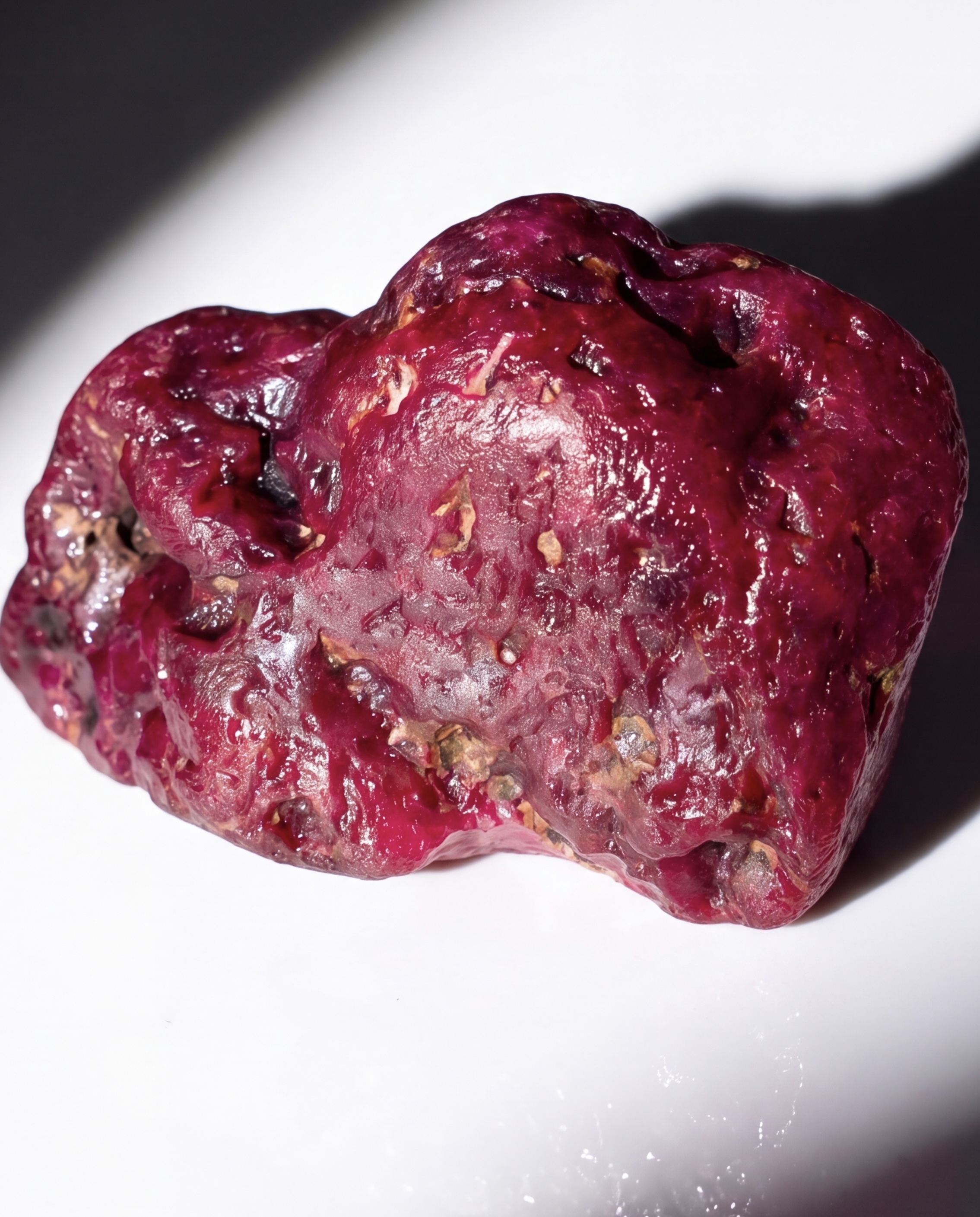
An eleven-thousand-carat rough corundum has been recovered from the Mogok Stone Tract — the second-largest Burmese ruby ever documented. To understand why this single piece of news will reshape the entire upper segment of the colored-stone market for the next eighteen months, one has to understand how Burma actually delivers ruby to the world.
It does not deliver on a schedule. Mogok has been worked, on and off, for more than a thousand years. The mines tighten and loosen with politics, with weather, with the patience of men who have been working them across generations. Decades can pass between the truly significant finds. A single rough of this scale arrives perhaps once in a working lifetime. By the time it reaches a master cutter — and the trade will know within weeks which house has it — every specialist in Geneva, Bangkok, and Hong Kong will have begun recalibrating the upper benchmark for unheated, vivid-red, no-treatment Burmese material in the >3-carat tier. This is how the category re-prices: not through public auctions first, but through the private adjustment of what specialists are willing to pay before a single public lot crosses a block.
The public confirmation will come on the twenty-sixth of May. Christie's Hong Kong Magnificent Jewels opens that day with an unheated Burmese ruby on its short list, alongside the Ethereal Jadeite Necklace and a Kashmir sapphire. The timing is not coincidence. It is the calendar of a category being publicly re-priced. Specialists already know what is sitting in vaults waiting to be brought to market. The Mogok find is the kind of headline that pulls those pieces forward.
The investment posture follows from the geology and the calendar. Unheated Burma, above three carats, with credible certificates from at least two of GRS, SSEF, or Gübelin, sits on an eighteen-month upward trajectory that has just accelerated. The middle of the market — heated commercial ruby at one or two thousand dollars per carat — does not benefit. The very high end will, and quickly.
What the trade examines before a stone changes hands is unchanged by the news. The word vivid on the certificate, with no qualifier. Longwave UV fluorescence consistent with marble-host origin — the soft chalky red that tells a specialist the stone was born in the right kind of rock. Two independent labs, not one. The stone seen in candlelight and in north-facing daylight, because Burmese ruby has a particular quality of glowing from within that synthetic and Mozambican material cannot quite imitate. The criteria are old. The threshold above which they apply has just shifted upward.
The rest of the market will catch up to this find over the next eighteen months. The collectors who are paying attention have already begun.